Details That Tell a Couple’s Story
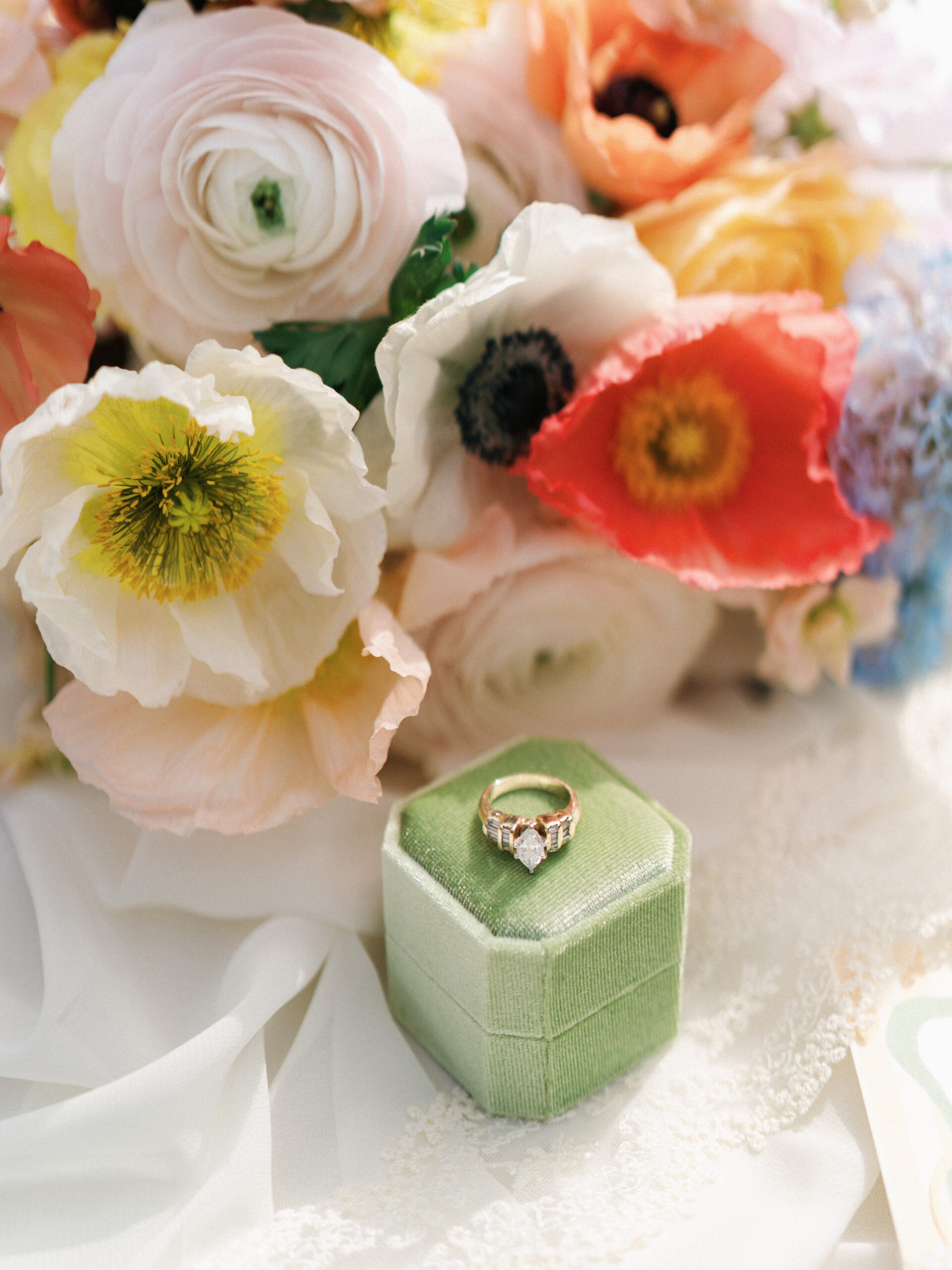
The strongest detail photos usually have a reason behind them, not just looking good in a flat lay. A grandmother’s brooch pinned to a bouquet, a handwritten note tucked into a jacket pocket, a pair of cufflinks passed down through a family, each carries a small story that a generic detail shot, a ring on a velvet box with no further context, does not. Choosing which details matter enough to photograph starts with a simple question: what would this couple actually want to remember holding again in ten years.
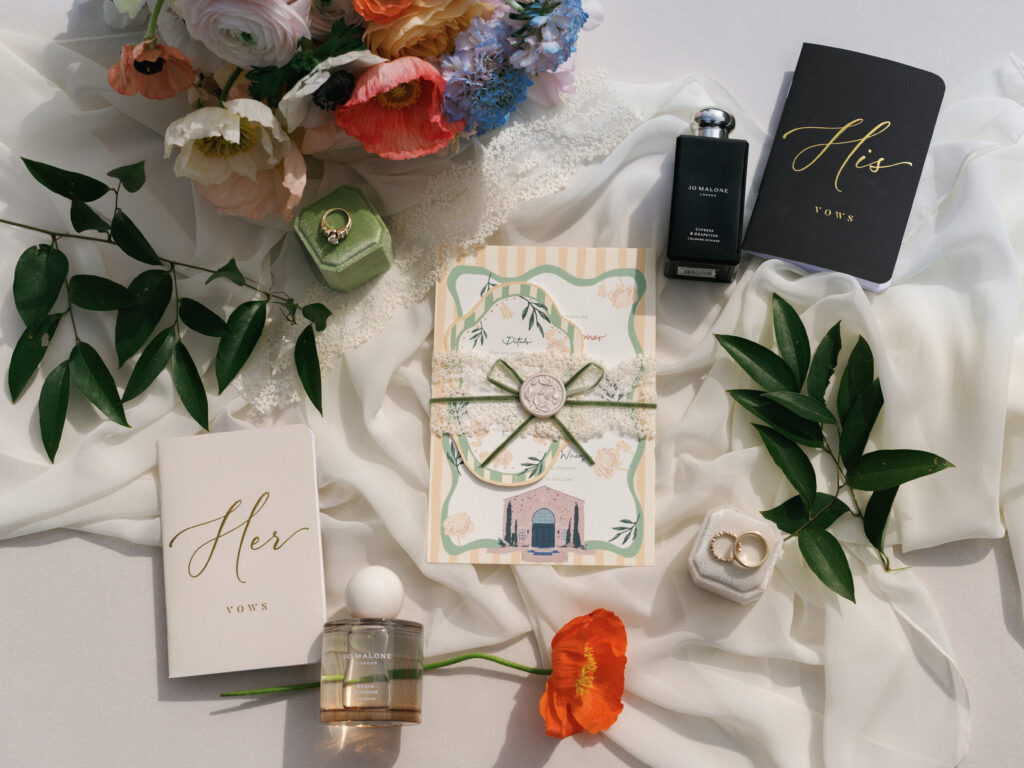
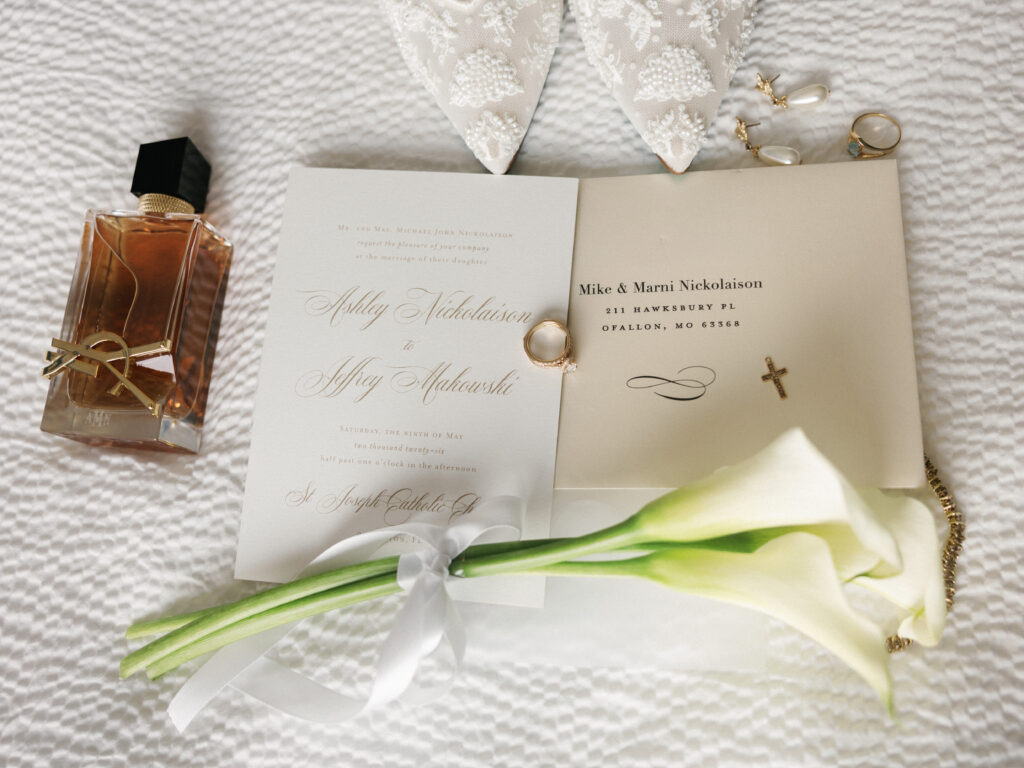
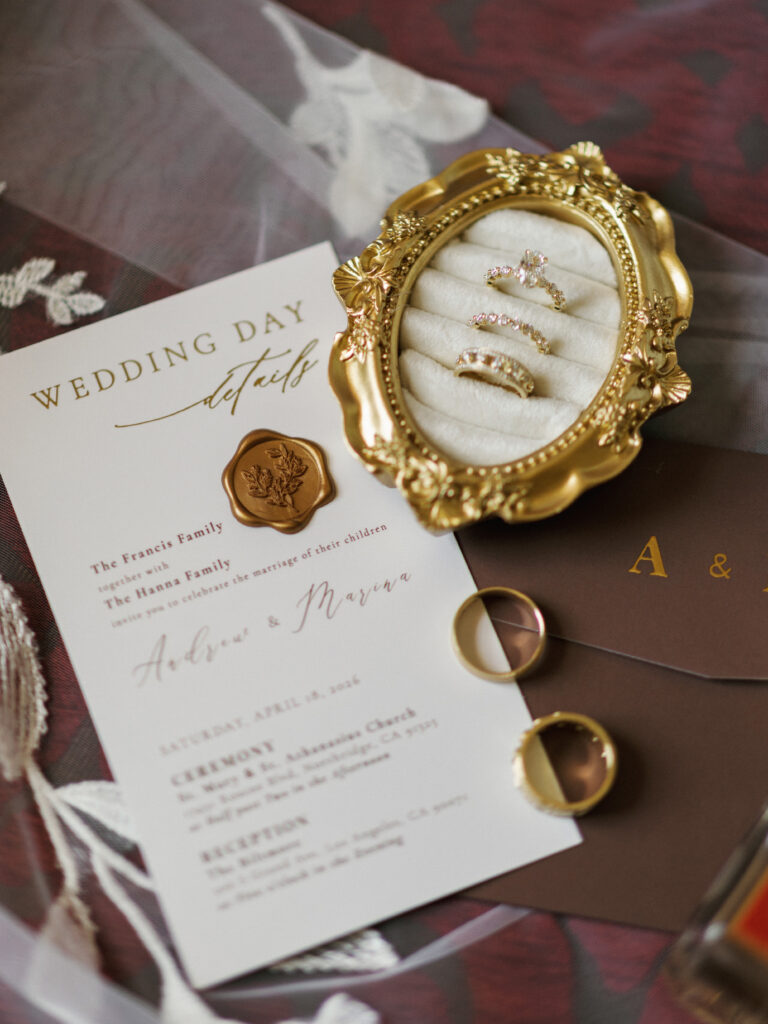
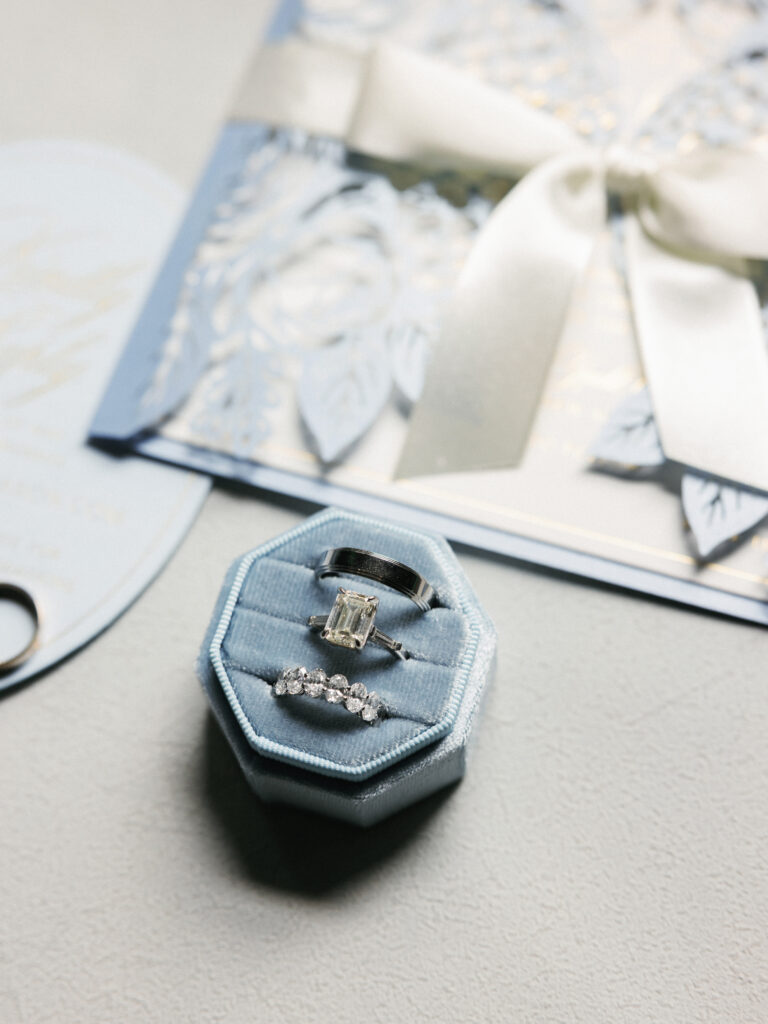
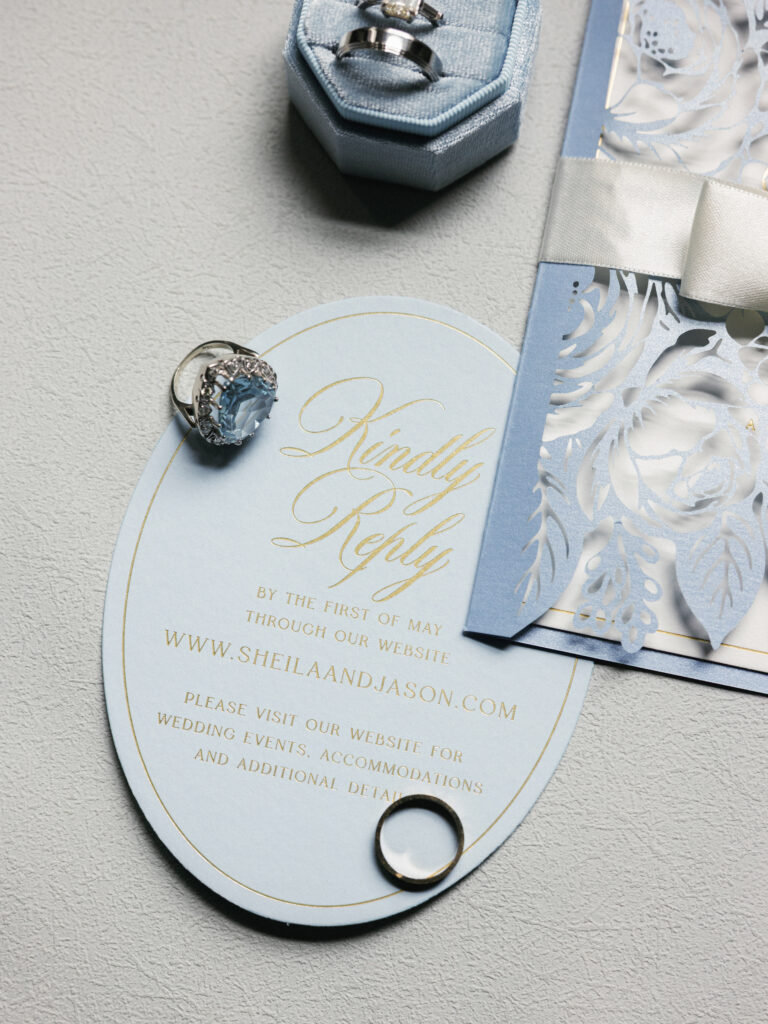
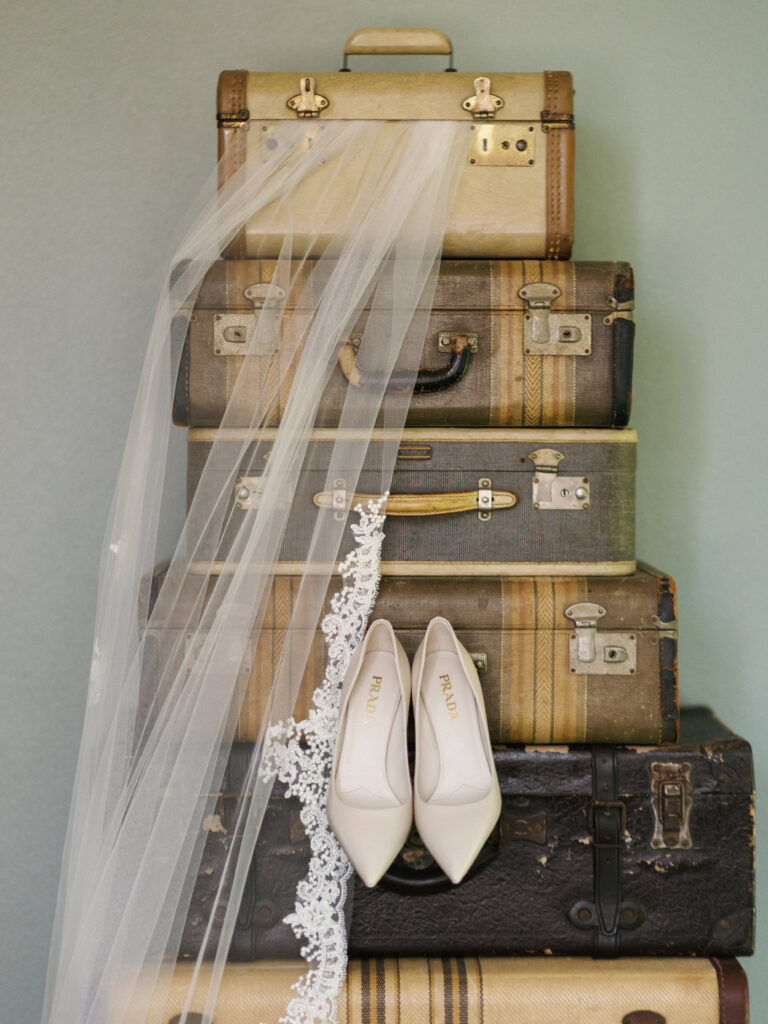
Not every detail needs a story behind it to earn a place in the gallery. Invitations, the couple’s shoes, a perfume bottle, and jewelry all photograph well on their own, simply by being well-chosen and well-lit. A strong gallery is usually a mix: a handful of objects with real meaning attached, alongside the practical, visually interesting pieces that round out the day’s small details.
Color and texture are worth a moment’s thought alongside story. A stationery suite with interesting paper texture, a ring with an unusual setting, shoes in a color that stands out against the rest of the morning’s palette, all give a photo and film team something visually distinct to work with, separate from whatever sentimental weight an object carries. A couple does not need to engineer this in advance, but noticing which existing items already stand out visually helps when deciding which pieces earn a place in a detail gallery with limited time to shoot it.
A Wedding Detail Box Checklist
Gathering everything into one place the night before saves real time on the morning of the wedding, when a photo and film team has a limited window to photograph details before getting ready coverage needs to begin. A single box or bag, handed to one specific person instead of scattered across several bags and pockets, keeps this part of the morning from turning into a search.
| Category | Items | Who brings it |
| Rings and jewelry | Wedding bands, engagement ring, earrings, necklace, family heirloom pieces | |
| Paper | Invitation suite, save the date, vows if written down, a meaningful letter | |
| Footwear and accessories | Shoes, veil, belt, cufflinks, tie, pocket square | |
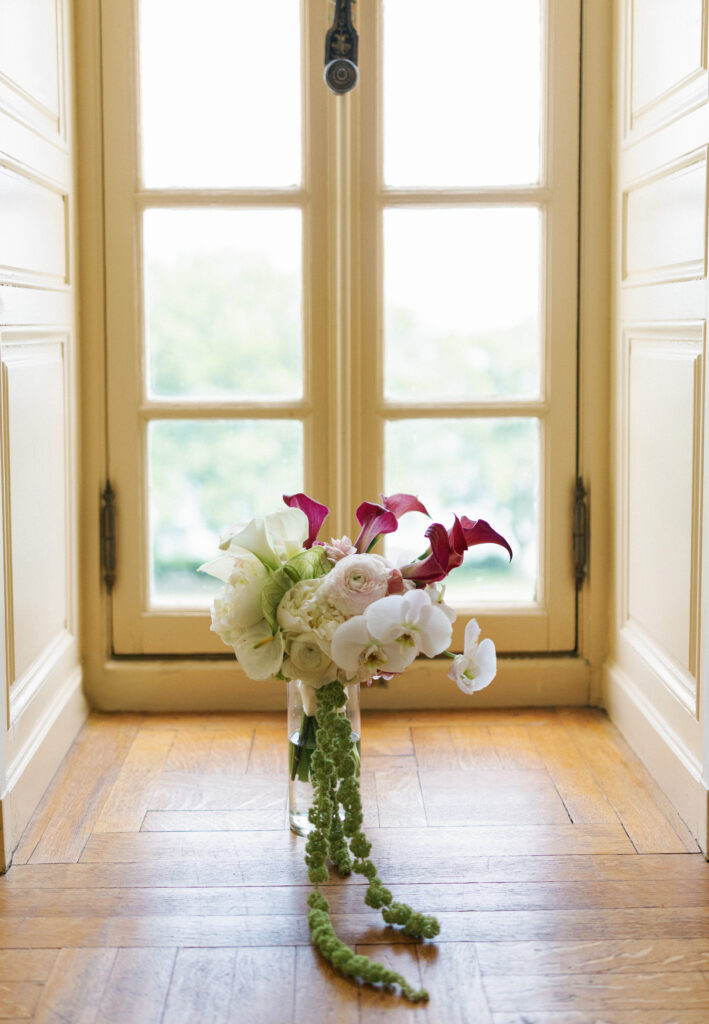
| Florals | Bouquet, boutonniere, loose stems for a flat lay | |
| Personal items | Perfume, a family heirloom, a childhood photo, a meaningful small object | |
| Other | Anything specific to this couple that does not fit neatly above |
Expert Note
Items with real sentimental weight, a grandparent’s ring, a parent’s handwriting on an old letter, are worth flagging specifically to a photo and film team in advance instead of placed anonymously in the box alongside everything else. A named object gets handled with more care and more attention during the shoot than one indistinguishable from the rest.
The box is worth checking the night before instead of assembled in a rush that morning. A quick pass through the table above, confirming each category has what it needs, catches a missing item while there is still time to find it, instead of discovering a gap once the photo and film team is already set up and waiting.
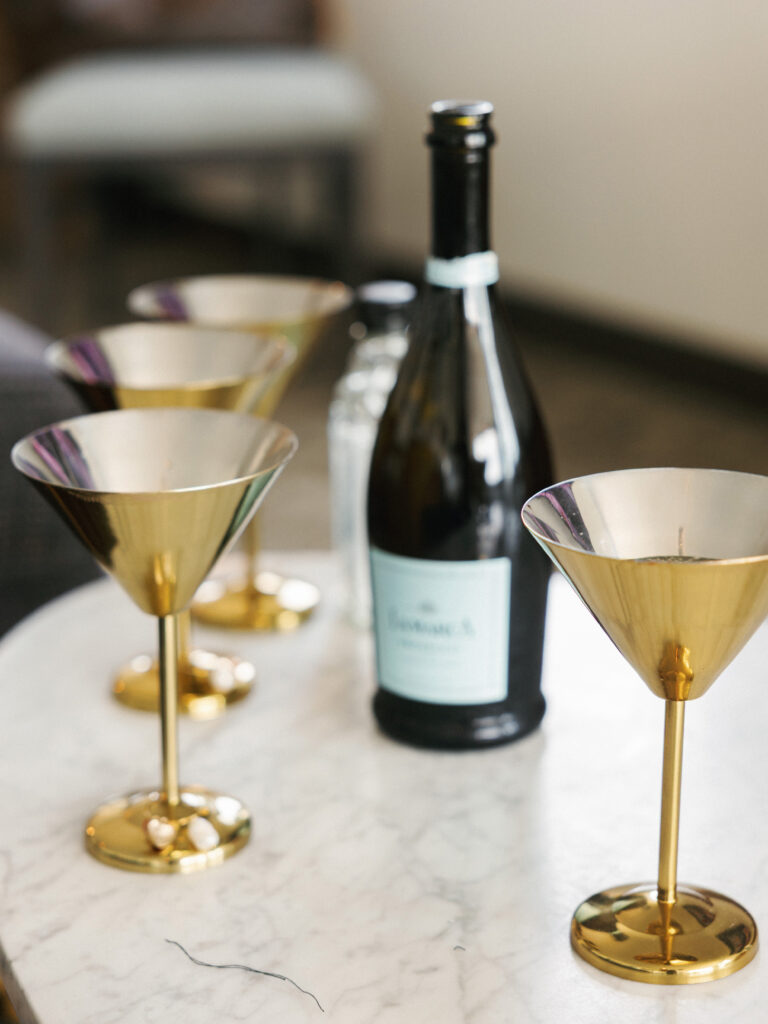
Flat Lays and Details in Use
A flat lay, objects arranged together and photographed from above, works well for a collected group of smaller items: rings resting on an invitation, a bouquet beside a pair of earrings, shoes next to a perfume bottle. This kind of image works best with a few complementary pieces arranged with some care, instead of every single detail crammed into one composition.
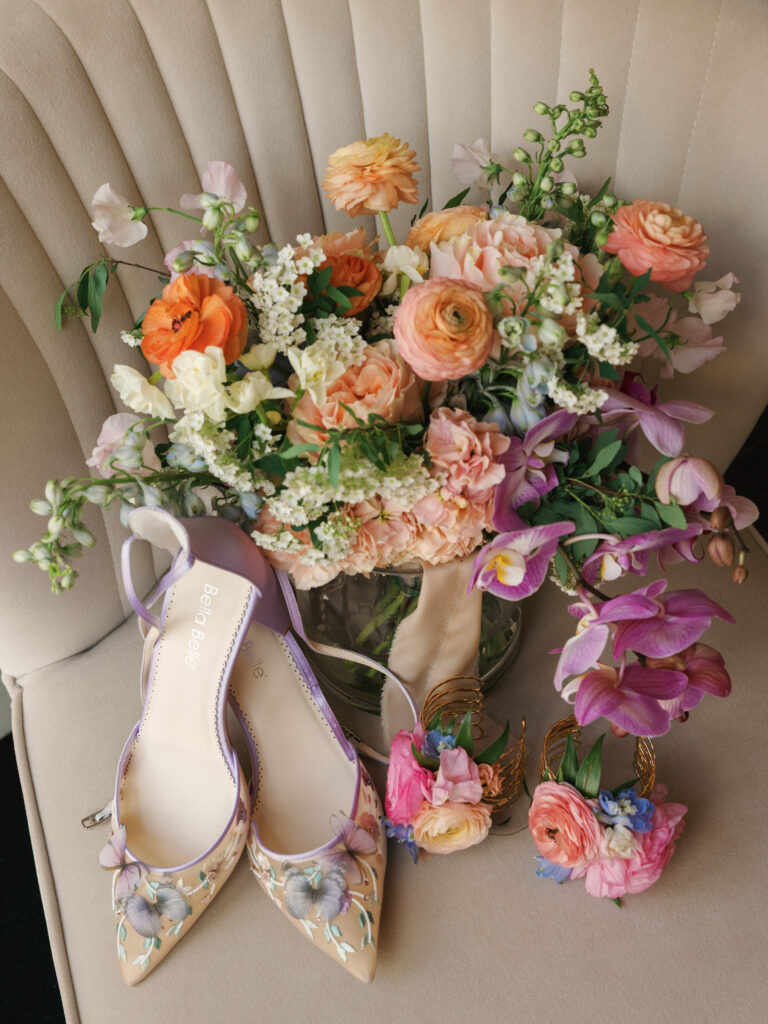
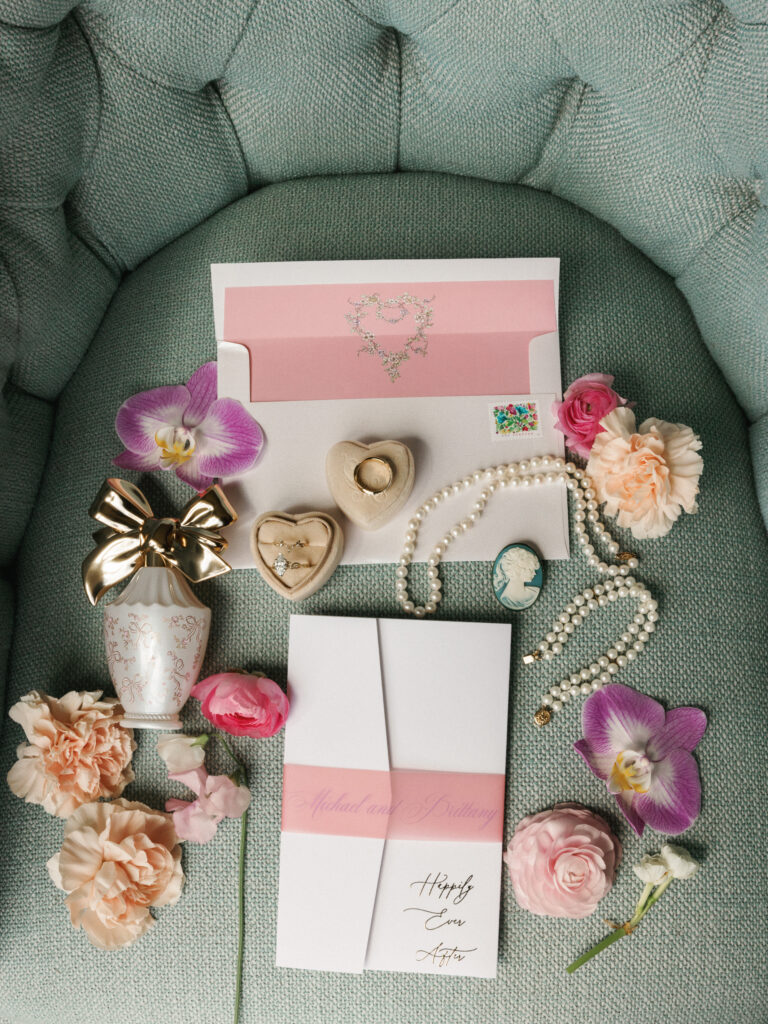
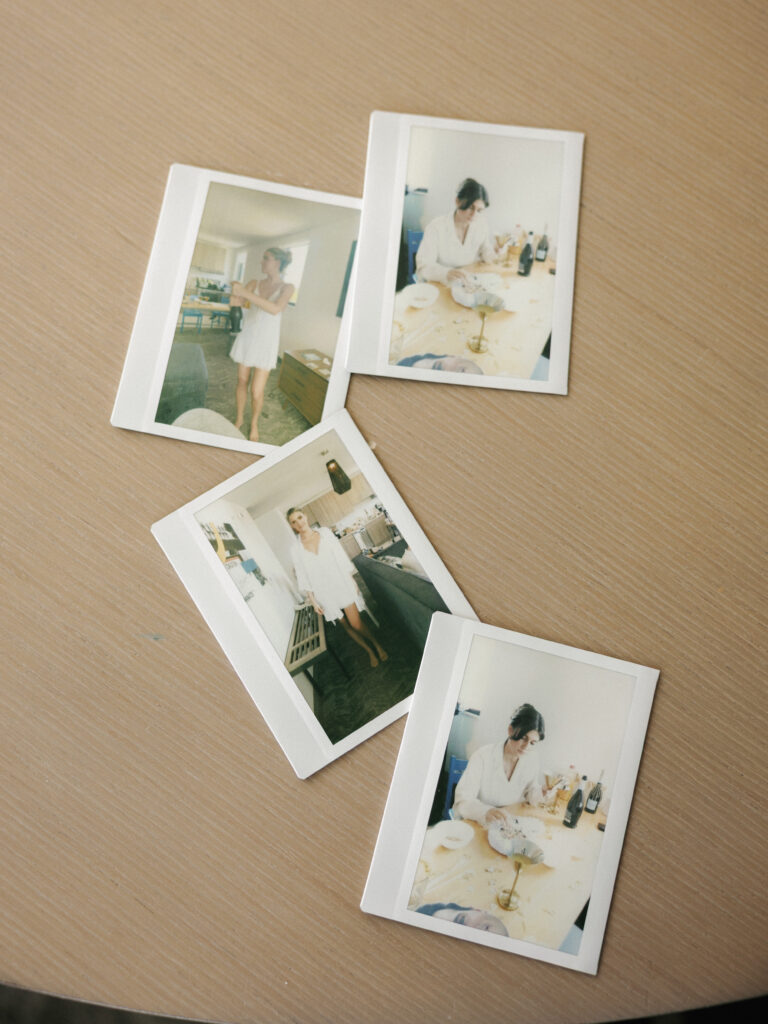
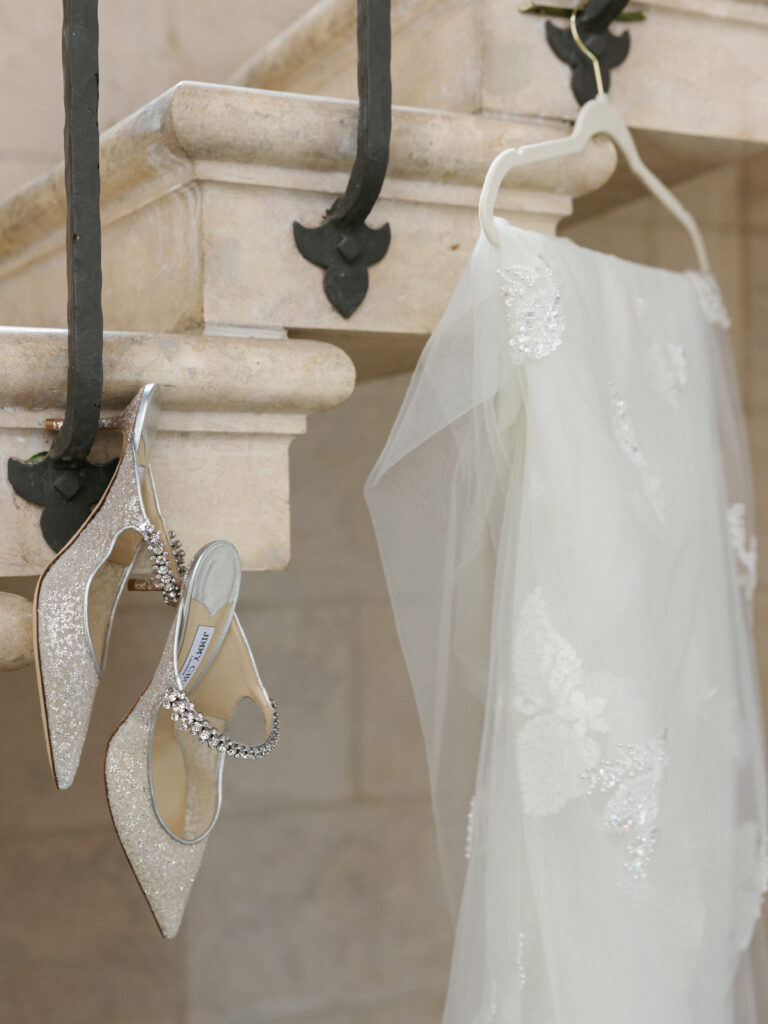
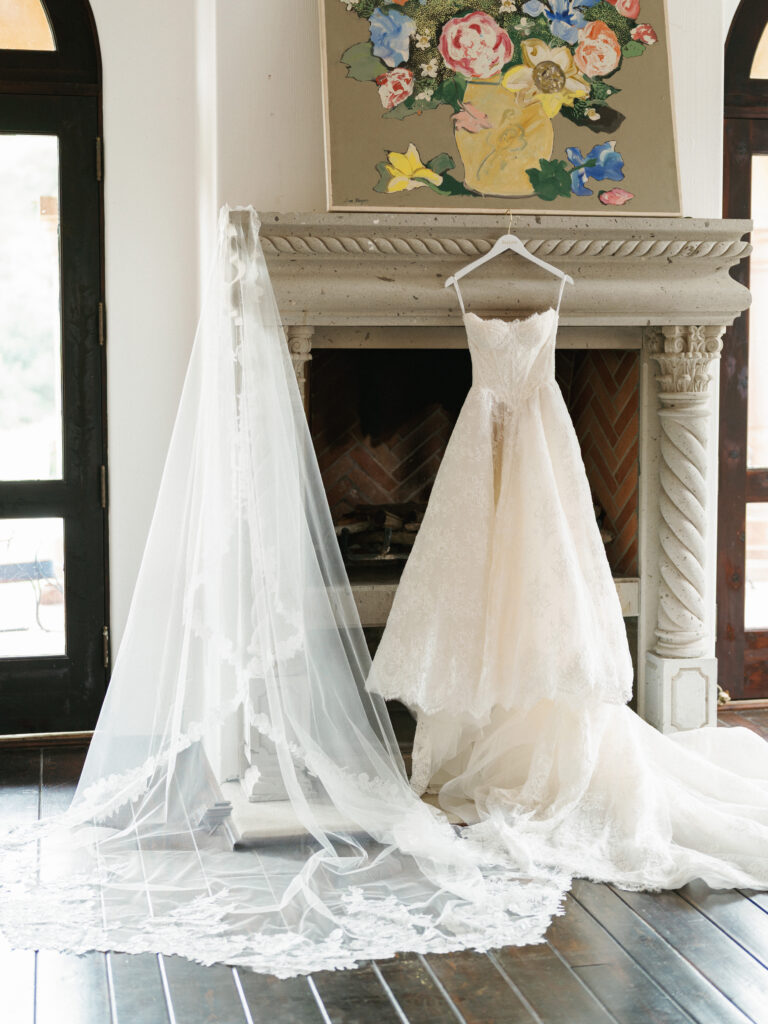
Details in use tell a different kind of story than a flat lay does. A ring photographed on a hand instead of alone on a table, shoes mid-step instead of posed on the floor, a veil caught in motion instead of laid flat, all carry a sense of the day actually happening around the object instead of the object sitting still for its own portrait. A full detail gallery tends to use both approaches well: the careful, composed flat lay and the looser, more candid version of the same objects in motion.
From Morning Accessories to the Reception Room
Detail photography does not end once getting ready wraps up. Morning accessories, rings, invitations, shoes, perfume, get their attention early, but the reception room holds its own set of details worth the same care: place settings, a seating chart, a cake before it is cut, menu cards, favors left at each seat. These later details tell the second half of the same story, the planning and care that went into the reception, in the same way the morning details tell the story of personal preparation.
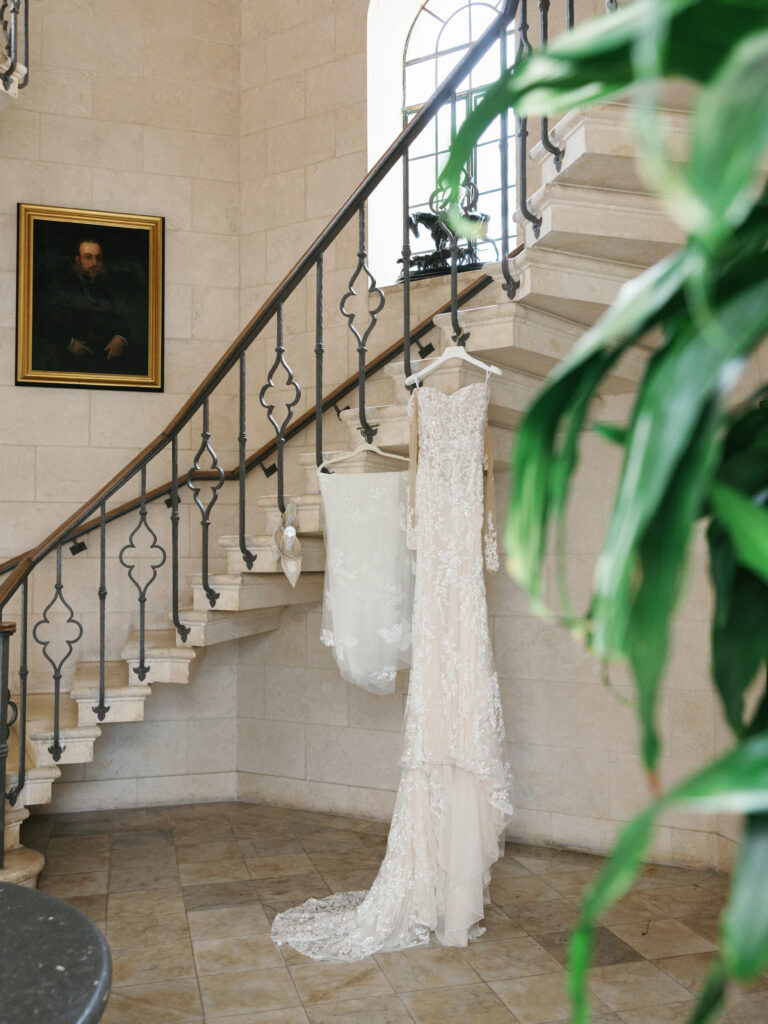
Treating both halves with equal attention keeps a full wedding gallery from feeling front-loaded, heavy on morning details and light on everything that came later. A reception room photographed before guests arrive, while everything is still perfectly arranged, captures a version of the space that becomes impossible to recreate once dinner service and dancing are underway.
This window before guests arrive is narrow and worth planning around specifically. A photo and film team typically needs only a few minutes to move through a reception room and capture its key details, but that window closes the moment doors open and guests start finding their seats, so it tends to work best as a clearly marked block on the day’s schedule instead of something fit in whenever there happens to be a gap.
Assembling Everything Without Buying Extra
A meaningful detail collection does not require purchasing props or decorative extras specifically for photos. Existing items, gathered the night before instead of hunted down the morning of the wedding, almost always photograph better than something bought last-minute and unfamiliar. A couple’s own invitation suite, their actual shoes, jewelry already chosen for the day, and a few personal objects with real history behind them are usually enough to build a full, meaningful set of detail images.
Handing the gathered box to one specific person, a maid of honor, a parent, a wedding planner, removes the risk of items being spread across several bags or left behind entirely. That person becomes the single point of contact for the detail box on the morning of the wedding, which simplifies handoff to a photo and film team considerably compared to collecting pieces from several different people in different rooms.
Flagging a few particularly important items in advance, verbally or in a short note alongside the box, ensures nothing meaningful gets treated as an afterthought once the morning gets busy. A short written note works better than a verbal mention passed along secondhand, since details tend to get lost between the person who knows the story and the person actually handing off the box on the morning of the wedding.
How this detail work fits into the broader shape of the morning, alongside getting ready coverage and the rest of the day’s schedule, is covered separately in a companion piece on getting ready photography.
A Simple Detail Photo Checklist
All items from the detail box checklist are gathered into a single container the night before the wedding.
One specific person has been named to bring and hand off the box on the wedding morning.
Any item with real sentimental meaning has been flagged directly to the photo and film team in advance.
The reception room’s own details, place settings, cake, favors, are confirmed as part of the coverage plan instead of assumed to happen automatically.
FAQ
What counts as a wedding detail photo?
Detail photos cover the small objects connected to a wedding day: rings, invitations, shoes, jewelry, florals, and personal items with meaning attached, along with reception details like place settings and a cake. They are typically photographed separately from people, either arranged as a flat lay or shown in use throughout the day.
What should go in a wedding detail box?
A practical starting list includes rings and jewelry, the invitation suite, shoes and accessories, florals, and any personal items with sentimental value, a family heirloom, a handwritten letter, a childhood photo. Gathering these into one container the night before, instead of the morning of the wedding, saves real time.
Who should be responsible for the wedding detail box?
One specific person, instead of several people each holding a piece, tends to work best. A maid of honor, a parent, or a wedding planner can serve as a single point of contact, simplifying handoff to a photo and film team on a morning that is often already tightly scheduled.
Do wedding detail photos need to include purchased props?
No, existing items generally photograph better than anything bought specifically for the purpose. A couple’s actual invitations, shoes, and jewelry, along with a few personal objects with real history, are typically enough to build a complete and meaningful set of detail images.
Let’s Plan the Coverage Together
We would be glad to talk through which details matter most for a couple’s own detail gallery, and help build a simple checklist around the items that carry real meaning, from morning accessories through to the reception room.